




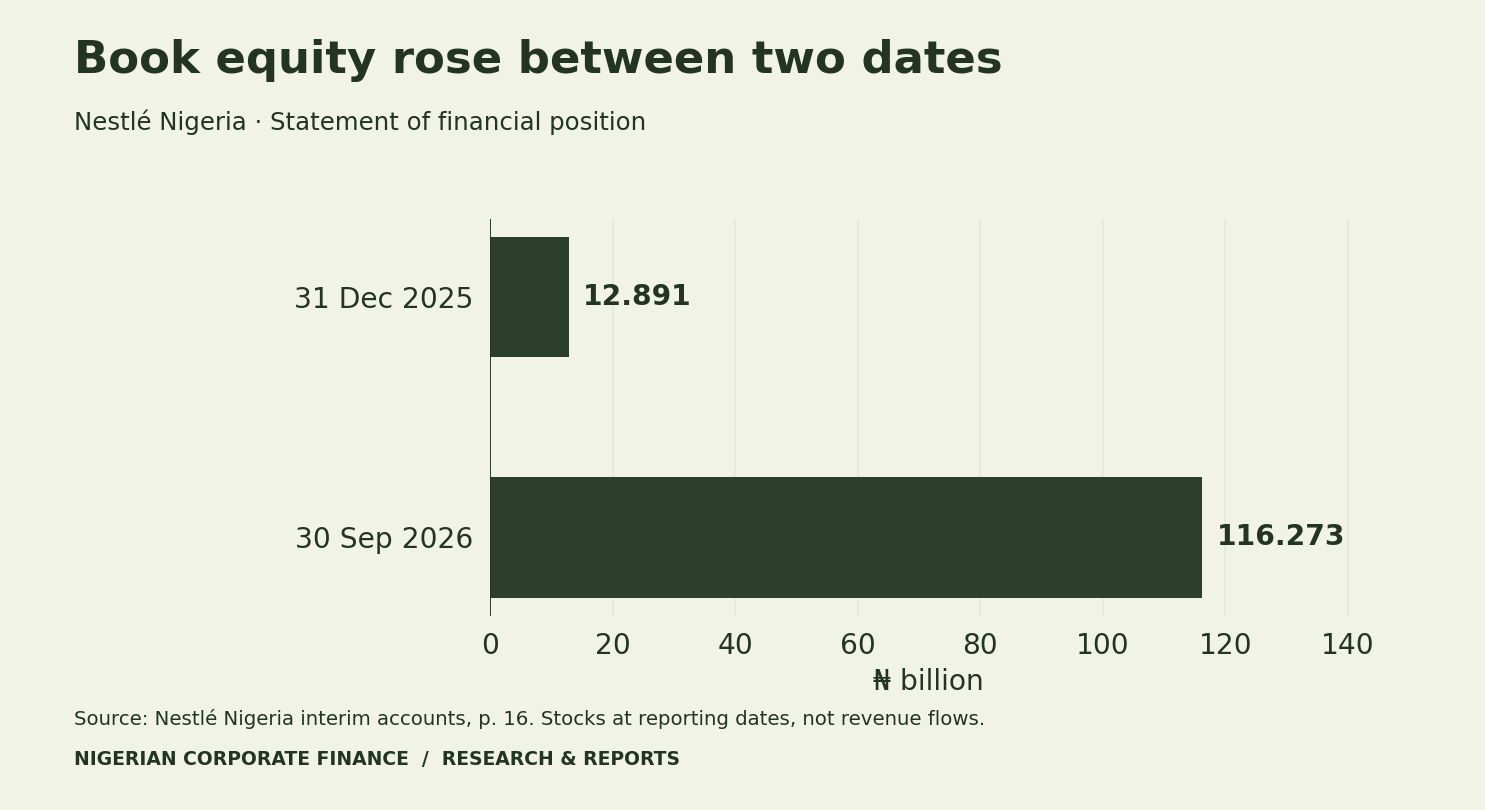
Nestlé Nigeria reported ₦116.273 billion of equity at 30 September 2026, even though its balance sheet still showed ₦9.403 billion of accumulated losses. In particular, its ₦124.553 billion revaluation reserve helps explain how both balances can be true. To understand Nestlé Nigeria’s equity and accumulated losses in 2026, read the signed components before drawing conclusions from the total.
The company’s 29 October release rounded the increase from ₦12.9 billion to ₦116.3 billion. In the release, those figures compare two balance-sheet dates. By contrast, profit measures activity over the nine months.
Read the five equity components
Start with page 16 of the unaudited interim statements. First, the statement shows share capital and share premium. Next, it shows the revaluation and share-based payment reserves. Finally, accumulated loss appears as a negative amount.
| Equity component | December 2025, ₦ thousand | September 2026, ₦ thousand |
|---|---|---|
| Share capital | 396,328 | 396,328 |
| Share premium | 32,262 | 32,262 |
| Revaluation reserve | 124,553,418 | 124,553,418 |
| Share-based payment reserve | 687,588 | 693,759 |
| Accumulated loss | −112,778,301 | −9,402,807 |
| Published total | 12,891,295 | 116,272,959 |
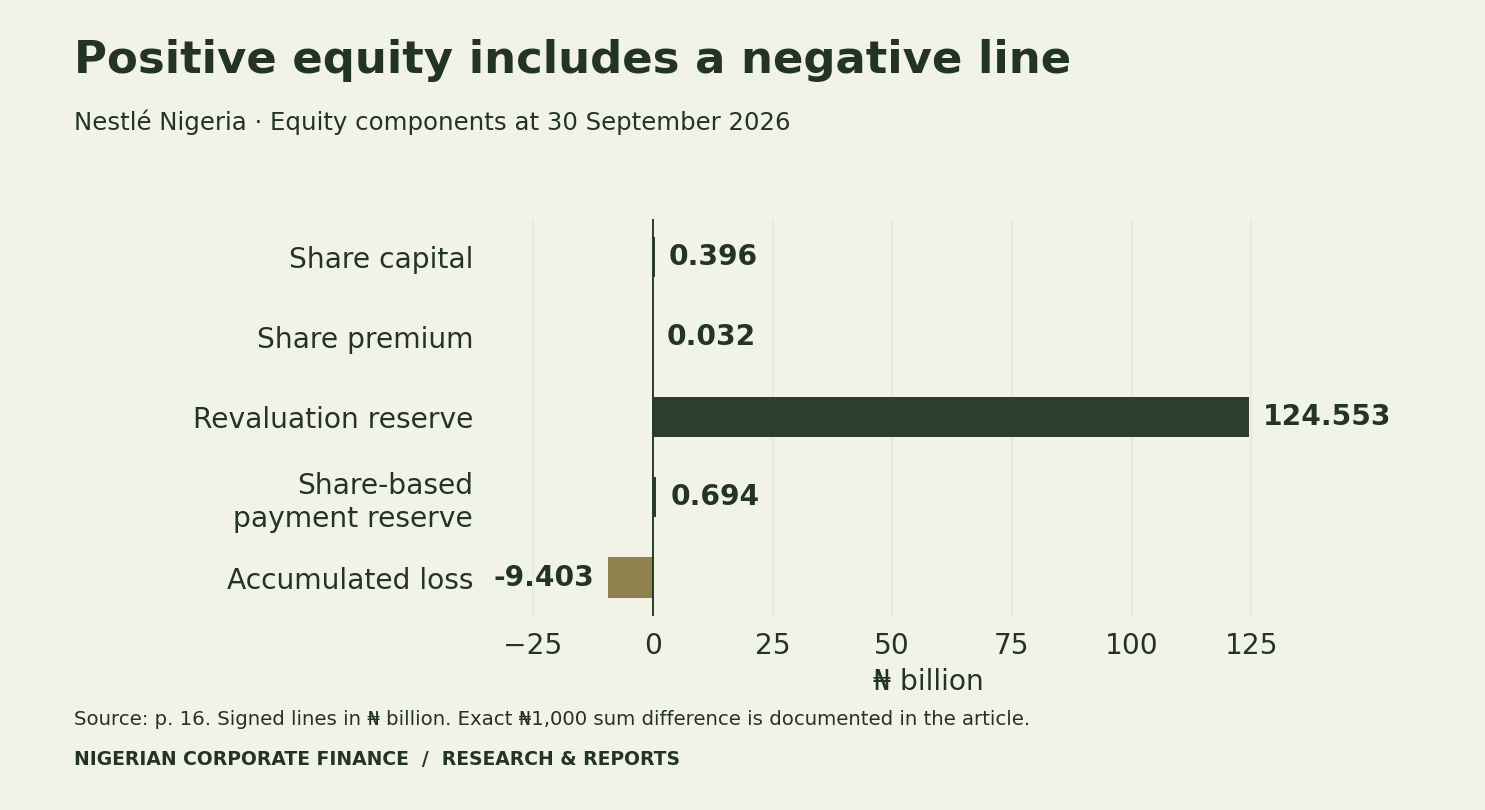
For example, the revaluation reserve forms part of book equity. However, it does not represent a separate cash account. Likewise, a positive total does not erase the accumulated loss. In other words, both balances belong on the same balance sheet.
Compare what actually moved
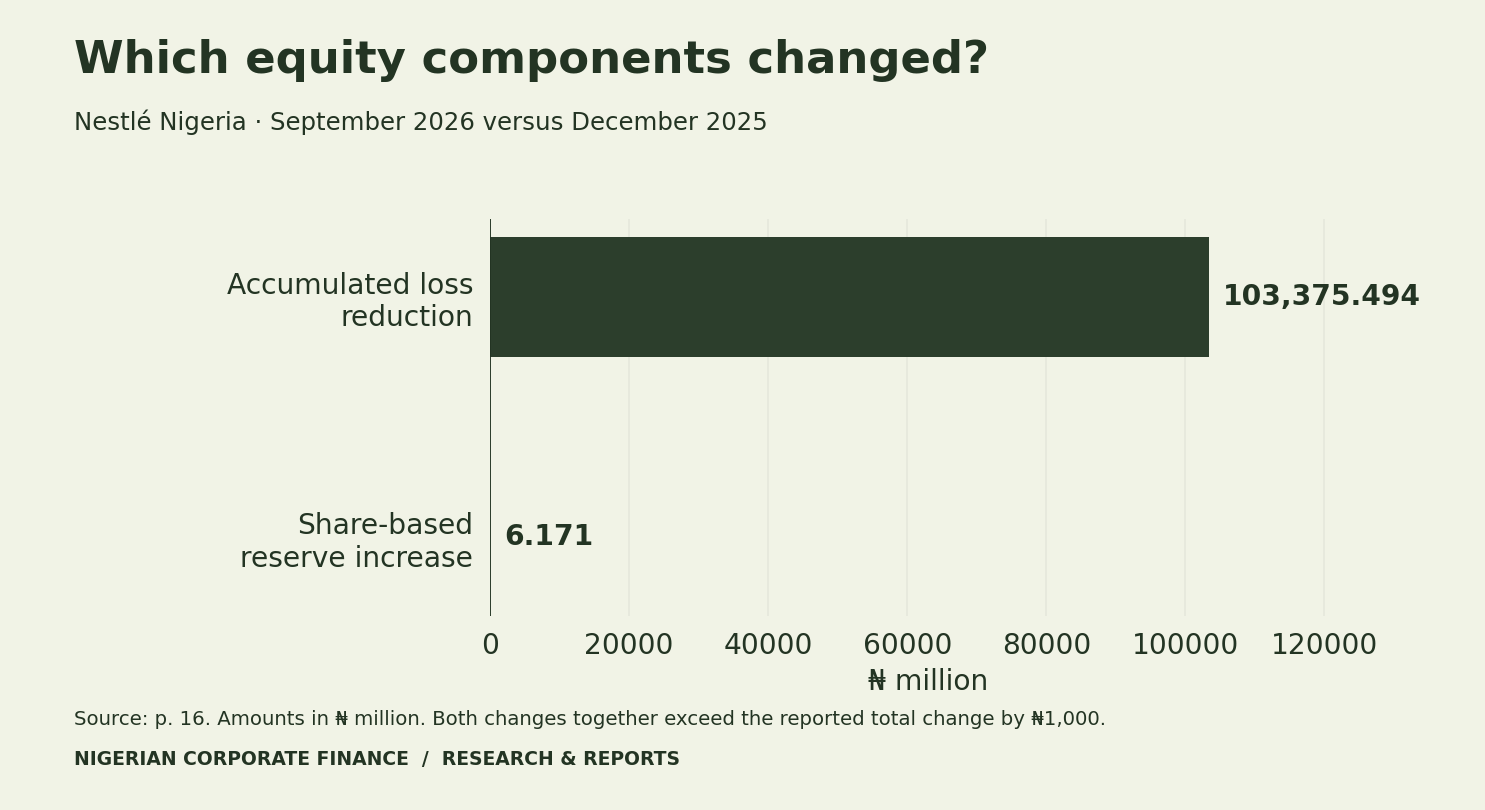
Between December and September, the accumulated loss narrowed by ₦103.375494 billion from December to September. Meanwhile, the share-based payment reserve rose by ₦6.171 million. By contrast, share capital, share premium and the revaluation reserve showed no change.
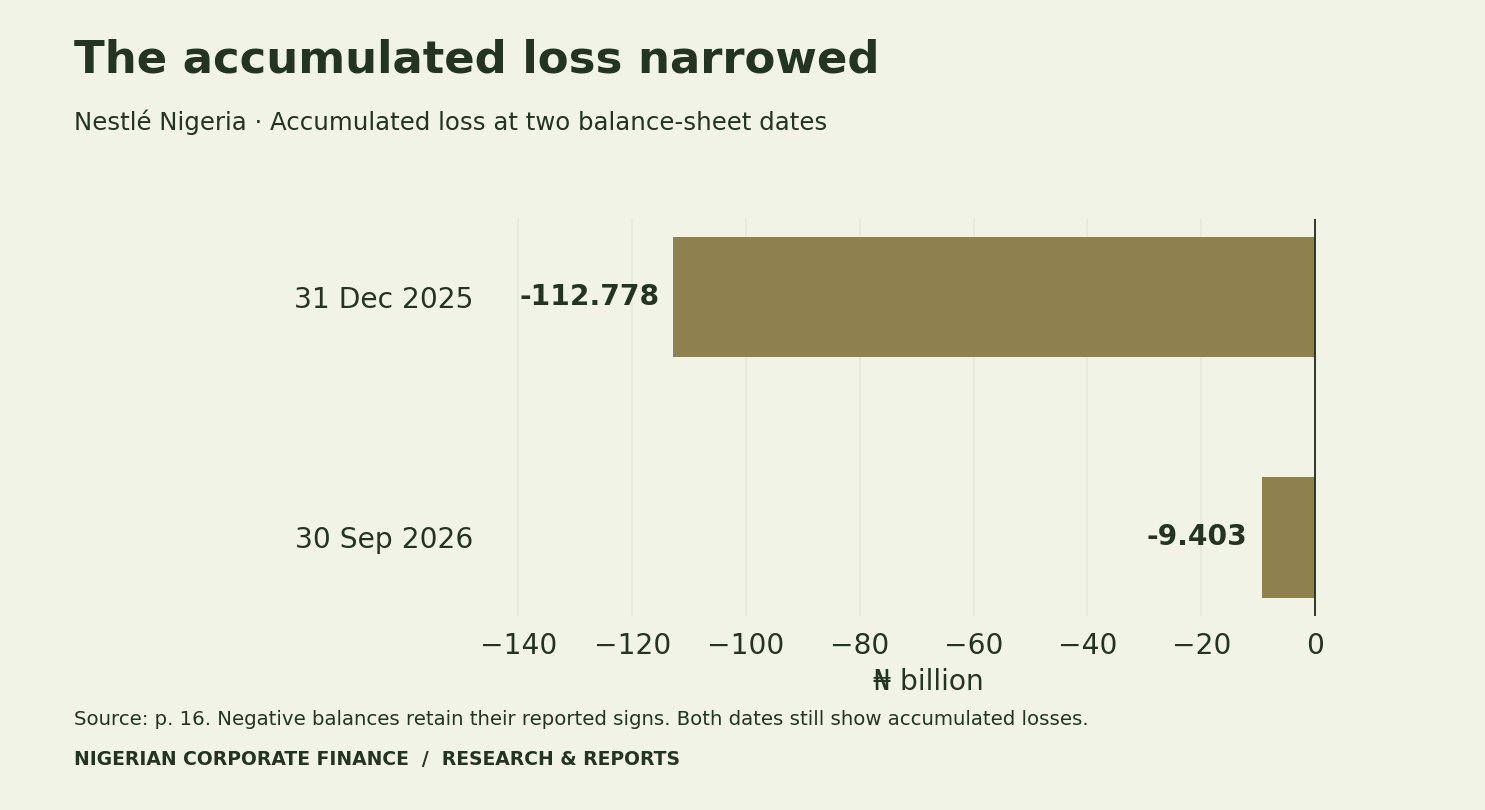
In particular, the revaluation reserve helps explain the composition at September. Since its displayed balance did not move, it does not explain the increase between these two dates. Overall, reported equity rose by ₦103.381664 billion. To make the check reproducible, our worksheet separates that change from the sum of the component movements.
Keep both reconciliation exceptions open
First, the income statement on page 14 shows profit for the period of ₦103.374052 billion. By comparison, page 17 uses ₦103.375494 billion in the statement of changes in equity. As a result, the equity statement shows ₦1.442 million more. Separately, the press release uses the income statement value in its detailed table.
Second, adding the five September components gives ₦116.272960 billion. However, the published total is ₦116.272959 billion. Thus, the displayed components add to ₦1,000 more than the printed total. In contrast, the December components add to the published opening total exactly.
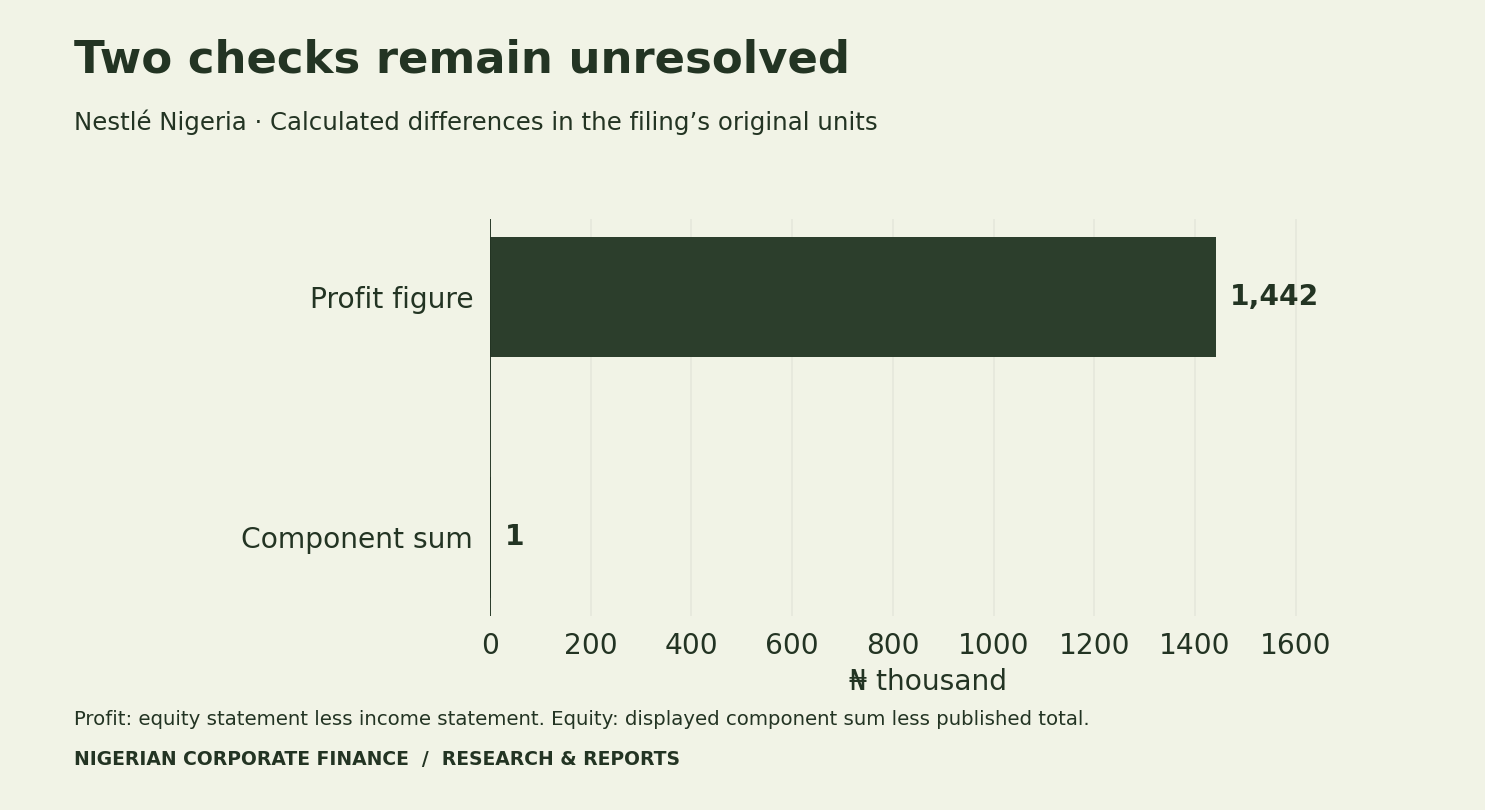
For the roll-forward, we use the equity statement’s own profit line. Then, adding it and the ₦6.171 million reserve movement to opening equity yields ₦116.272960 billion. Accordingly, we retain both differences without a balancing entry. Their cause remains unresolved in the filing.

Separate equity from cash and distribution questions
For a board review, ask five questions separately. What makes up book equity? What happened to accumulated results? Which cash is available and when? What do the borrowing covenants require? What amount, if any, can the company legally distribute?
For example, to check liquidity, turn to the cash-flow statement and the timing of obligations. To check a covenant, consult the loan terms and the documented calculation. Separately, obtain a legal and accounting assessment for distributions. A positive equity figure alone does not answer any of those three questions.
Our MTN cash tax reconciliation illustrates another distinction between a balance-sheet item and a cash-flow measure. The Unilever dividend cash-flow study covers the separate issue of funding a distribution.
Method and downloads
We transcribed the five equity components from page 16 and the roll-forward entries from page 17. Next, we added the original thousands-of-naira amounts before converting figures to billions for display. Finally, the exception log compares the printed values and leaves the differences open.
The accounts are unaudited. This analysis explains a book-equity balance at two dates. It does not provide a solvency opinion, market valuation, covenant certificate or dividend assessment.


