




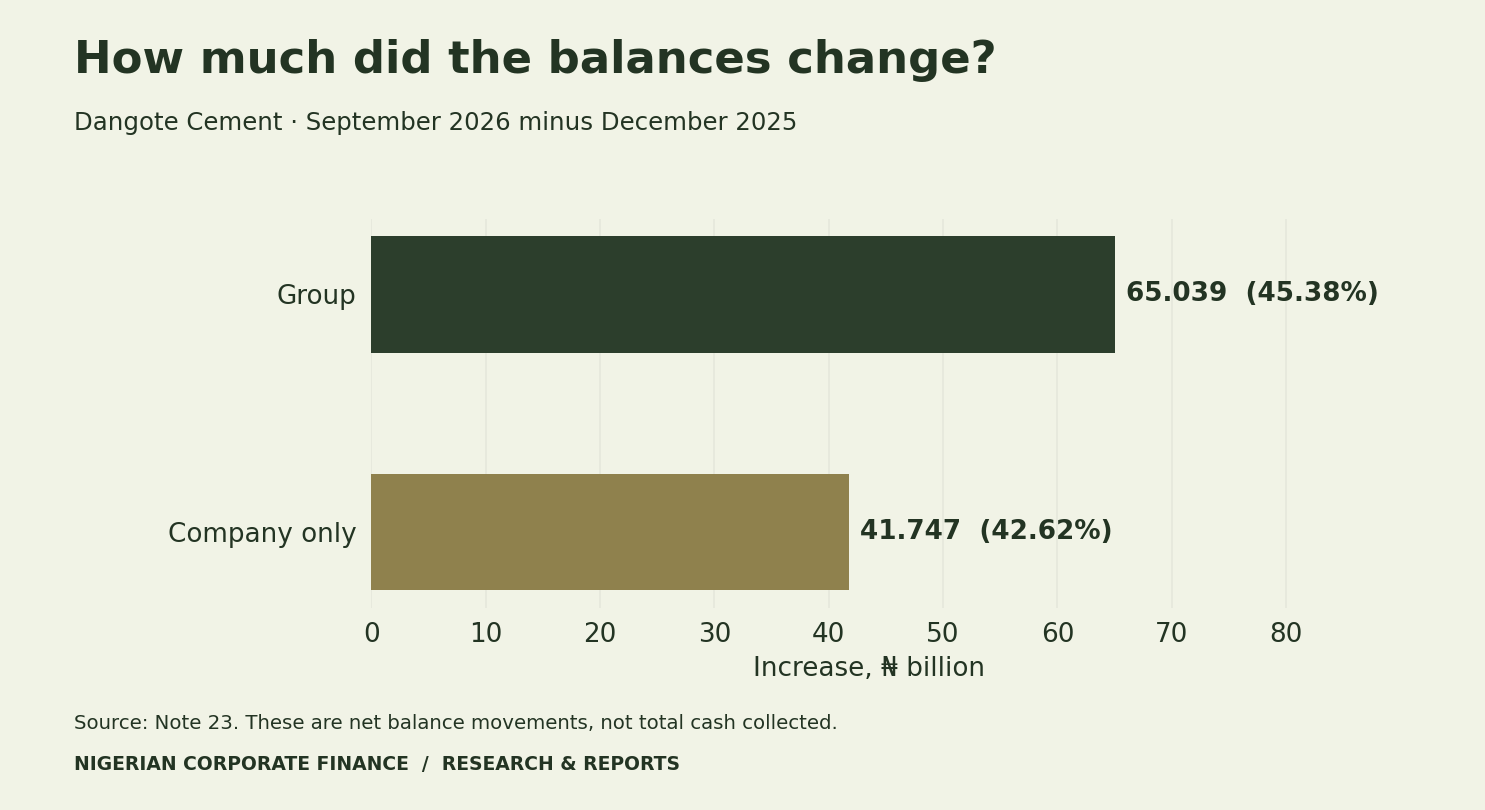
Dangote Cement’s group customer advances reached ₦208.372 billion at 30 September 2026. The balance had been ₦143.333 billion at 31 December 2025. That is a rise of ₦65.039 billion, or 45.38%. To interpret Dangote Cement’s customer advances in 2026, read the figure as a contract-liability balance at a date.
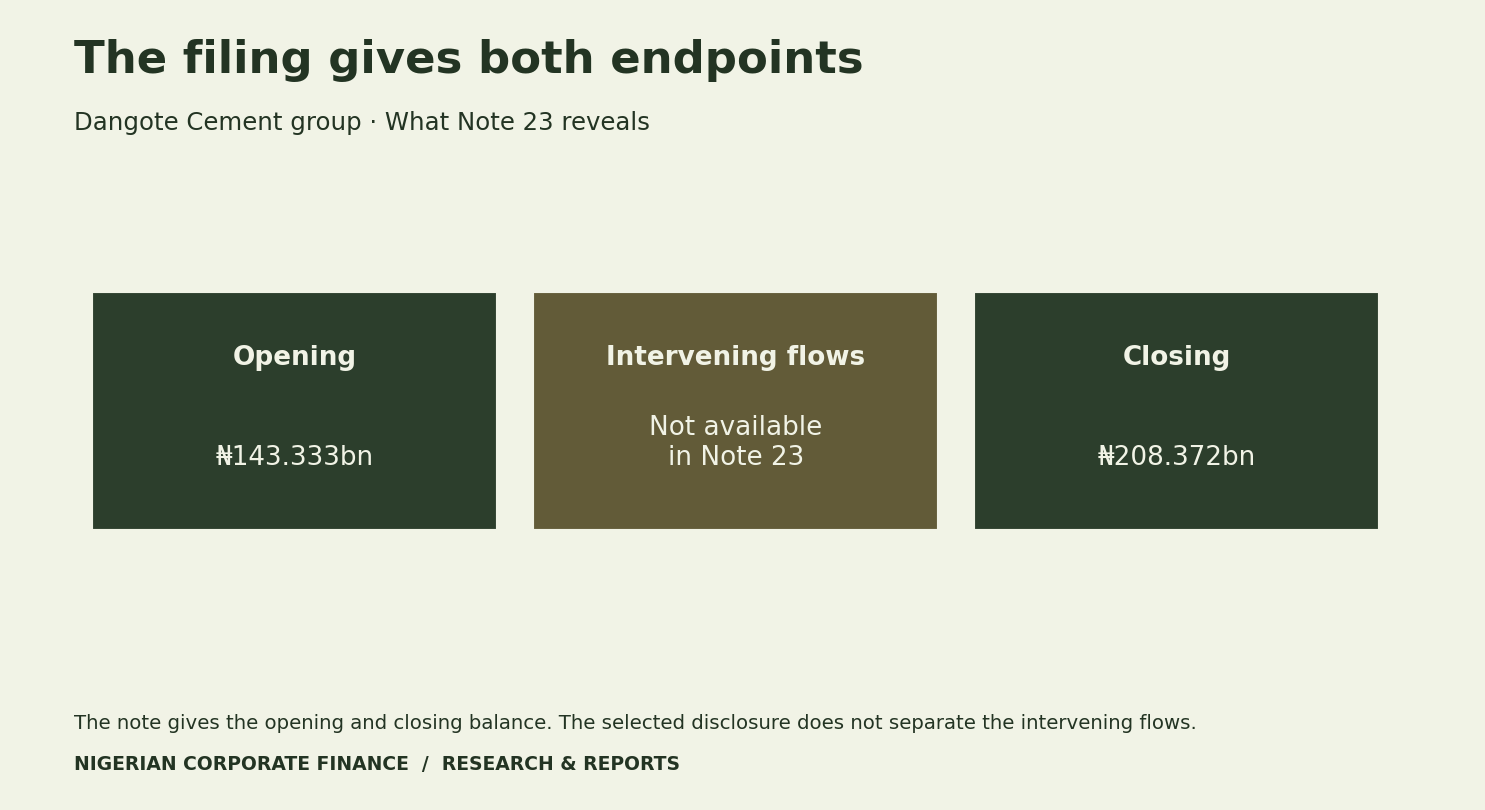
The balance alone cannot tell you how much advance cash the group collected during the nine months. New advances, deliveries and refunds can offset one another. To forecast cash and deliveries, start with a roll-forward that keeps each movement separate.
Compare group and company balances
The 28 October earnings release rounded customer advances to ₦208.4 billion and reported an increase of about 45%. For the exact figures, use Note 23 of the interim statements, approved on 27 October. The note shows separate group and company-only columns.
| Reporting scope | 31 December 2025, ₦bn | 30 September 2026, ₦bn | Change, ₦bn |
|---|---|---|---|
| Consolidated group | 143.333 | 208.372 | 65.039 |
| Company only | 97.959 | 139.706 | 41.747 |
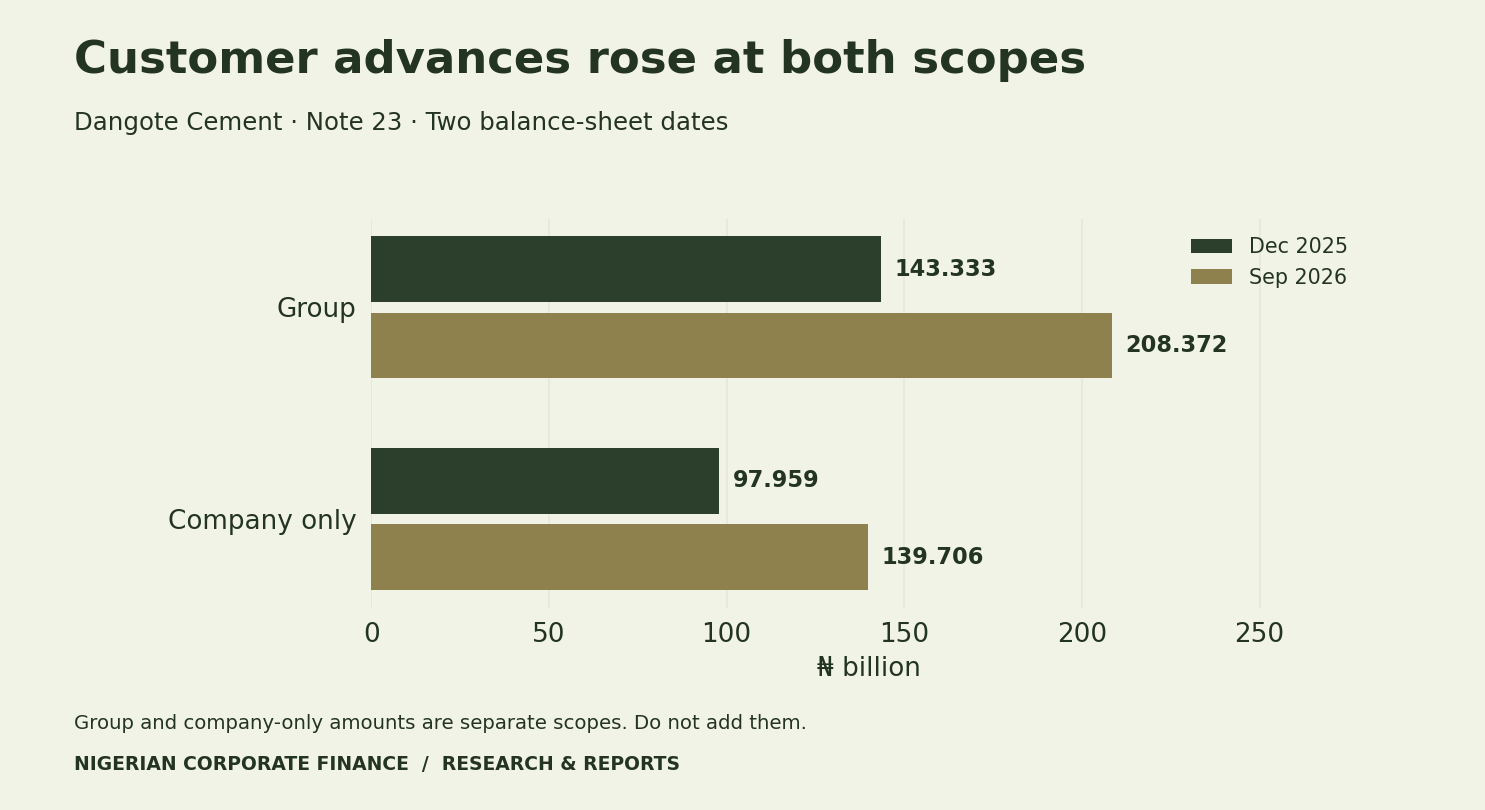
To reproduce the group percentage, first subtract 143,333 from 208,372 in millions of naira. Then divide 65,039 by 143,333. The company-only balance rose by ₦41.747 billion, or about 42.62%. Both calculations compare outstanding balances, so neither measures nine-month sales growth.
Why cash received can precede revenue
In its overview of IFRS 15, the IFRS Foundation explains that a business recognises revenue when it satisfies a performance obligation by transferring the promised good or service. By contrast, a customer advance can arrive before the business fulfils that obligation.
In Note 23, Dangote Cement presents advances from customers under trade and other payables as contract liabilities. Therefore, the outstanding balance describes an obligation. It does not identify the cash available for discretionary use, a profit amount or the total future sales the group will recognise.
Two roll-forwards can reach the same balance
For a simplified example, start with an opening advance liability. Add new advances, deduct amounts released as obligations are fulfilled, deduct refunds and account for any other signed movements. Keep unknown movements blank or mark them “not available.” A zero means you have evidence that the movement was zero.
Here are two fictional cases in millions of naira. Both start at 100. Case A adds 60 of new receipts, releases 35 on fulfilment and deducts five in refunds. Case B adds 110, releases 85 and also deducts five in refunds. Both assume zero other movements and close at 120.
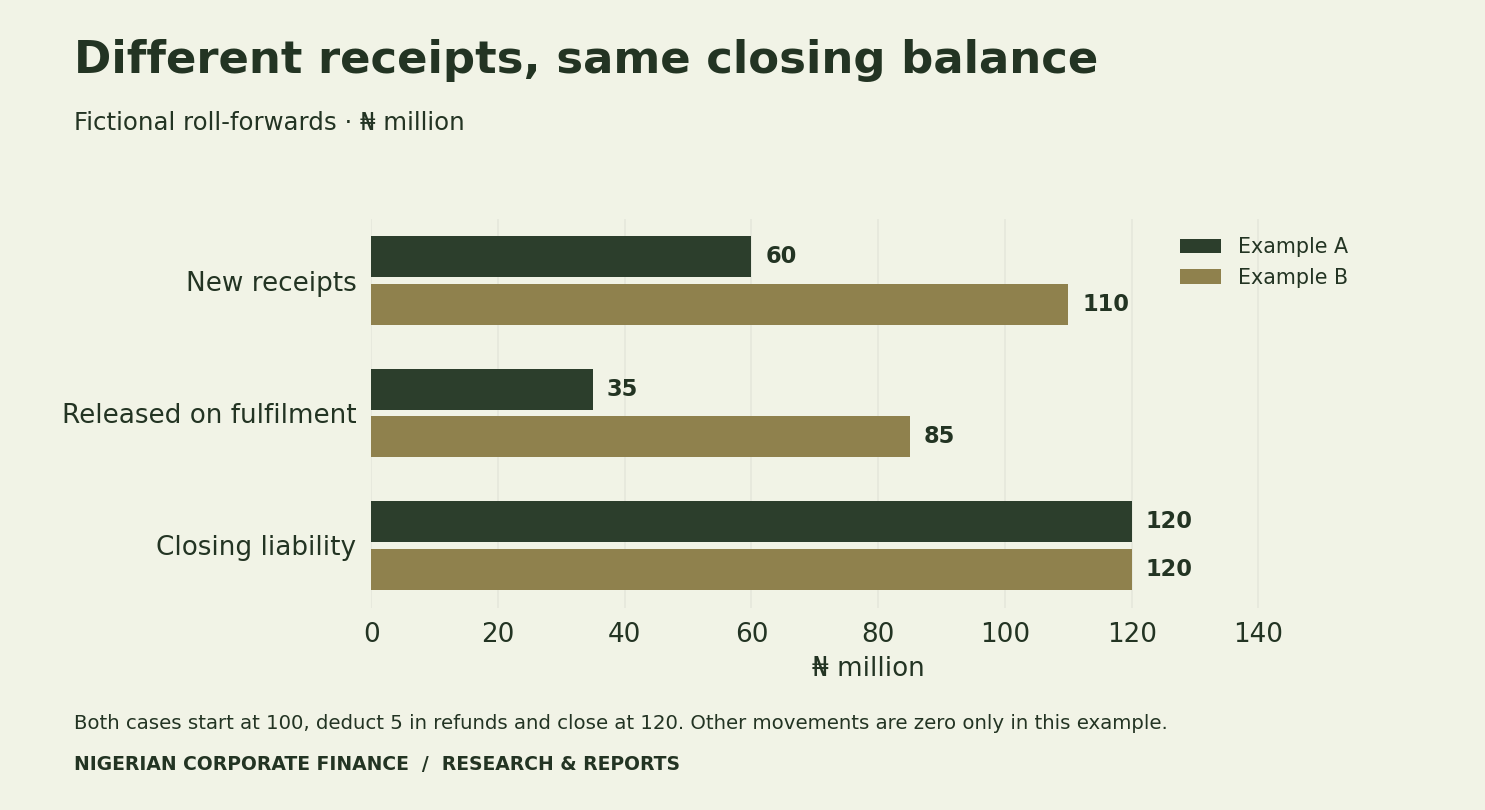
This is why the reported ₦65.039 billion change cannot fill the new receipts line. To make a stronger forecast, obtain order-level receipt dates, fulfilment amounts, refunds and other adjustments. Then tie the sum back to the period-end ledger.
Build a delivery and cash planning sheet
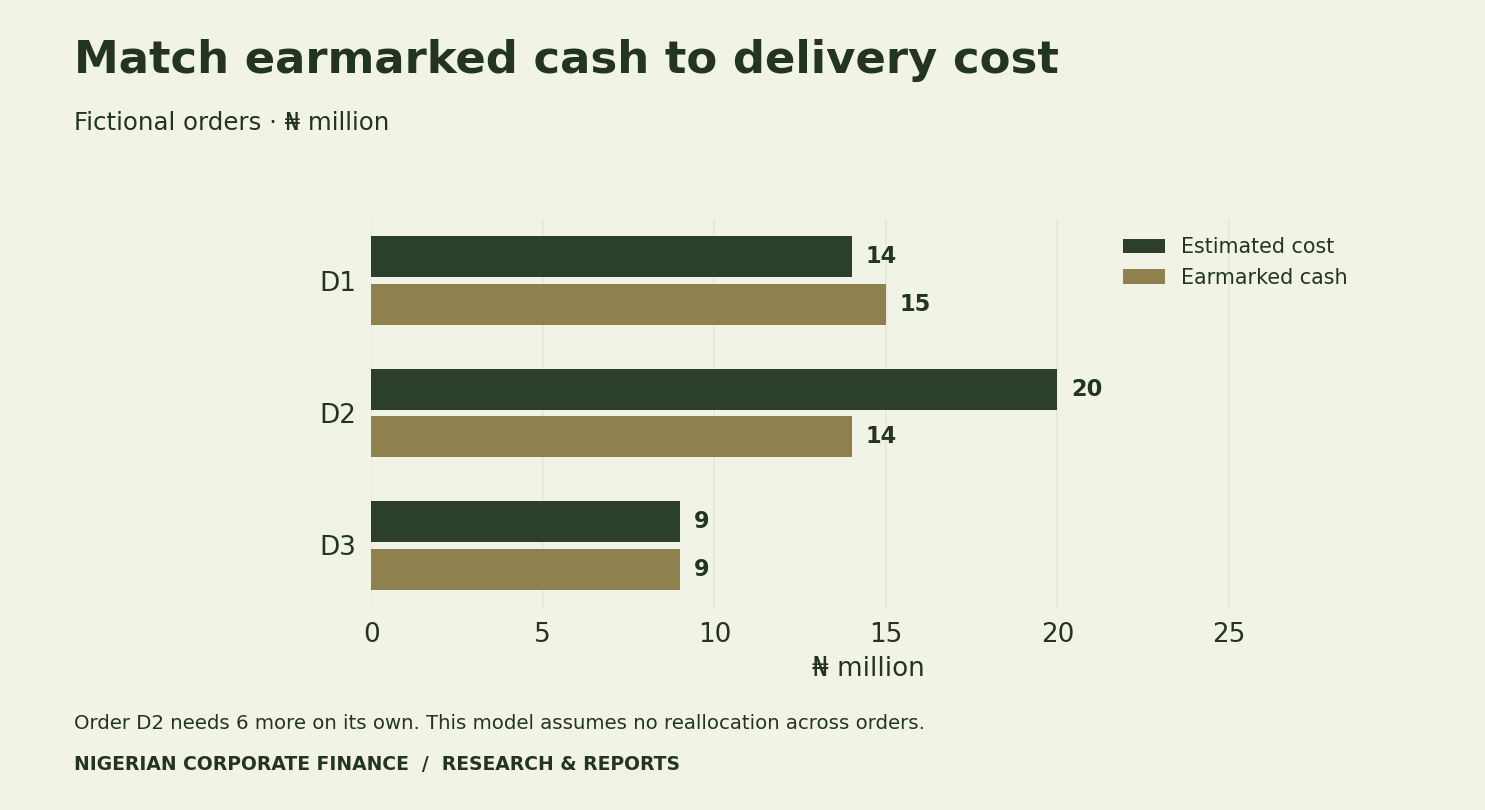
For each order, record the promised date, the remaining quantity, expected fulfilment cost and any refund terms. Then compare the estimated cash cost with the amount the finance team has earmarked. Keep the cash plan separate from the contract liability roll-forward.

For example, fictional order D2 has an estimated delivery cost of ₦20 million and ₦14 million set aside. It needs a further ₦6 million on its own. The worksheet assumes no reallocation between orders. It does not claim that Dangote Cement manages or reserves cash in this way.
Ask what the disclosure cannot answer
First, ask about ageing and expected delivery dates. Next, check customer concentration and cancellation or refund terms. Finally, reconcile unfulfilled quantities with dispatch and customer-acceptance records. These checks help explain whether balances will convert into delivery, refunds or other movements.
For related context, see our cash-flow management guide and MTN tax reconciliation. Both illustrate why balances and cash movements need separate evidence.
Method and downloads
We use Note 23 for both dates and both reporting scopes. We calculate changes from the figures in millions of naira and convert only for display. The source does not give the intervening flows in that note. The scenarios and delivery worksheet use invented inputs. They do not estimate Dangote’s order ageing, future sales, costs or refunds.


