





An NBET Series 2 bonds GenCo payment analysis needs two separate questions: what financing event has been announced, and what payment has a particular creditor actually received? A large listing figure can answer part of the first question while leaving the second unresolved.
This report checks the announced arithmetic, labels the evidence stages and supplies a fictional receivables bridge. It includes three charts, an evidence-map infographic and four free CSV tools. No GenCo bank account, invoice allocation or settlement agreement was inspected. Research checked on 12 November 2026.
NBET Series 2 bonds: what the listing announcement establishes
FMDQ’s announcement dated 5 November 2026 identifies ₦402.00 billion Tranche A and ₦326.98 billion Tranche B, both seven-year fixed-rate bonds, under a ₦4.00 trillion programme. It reports approval and listing, with a ₦728.98 billion aggregate. The issuer is NBET Finance Company PLC, established by Nigerian Bulk Electricity Trading PLC for structured power-sector financing.
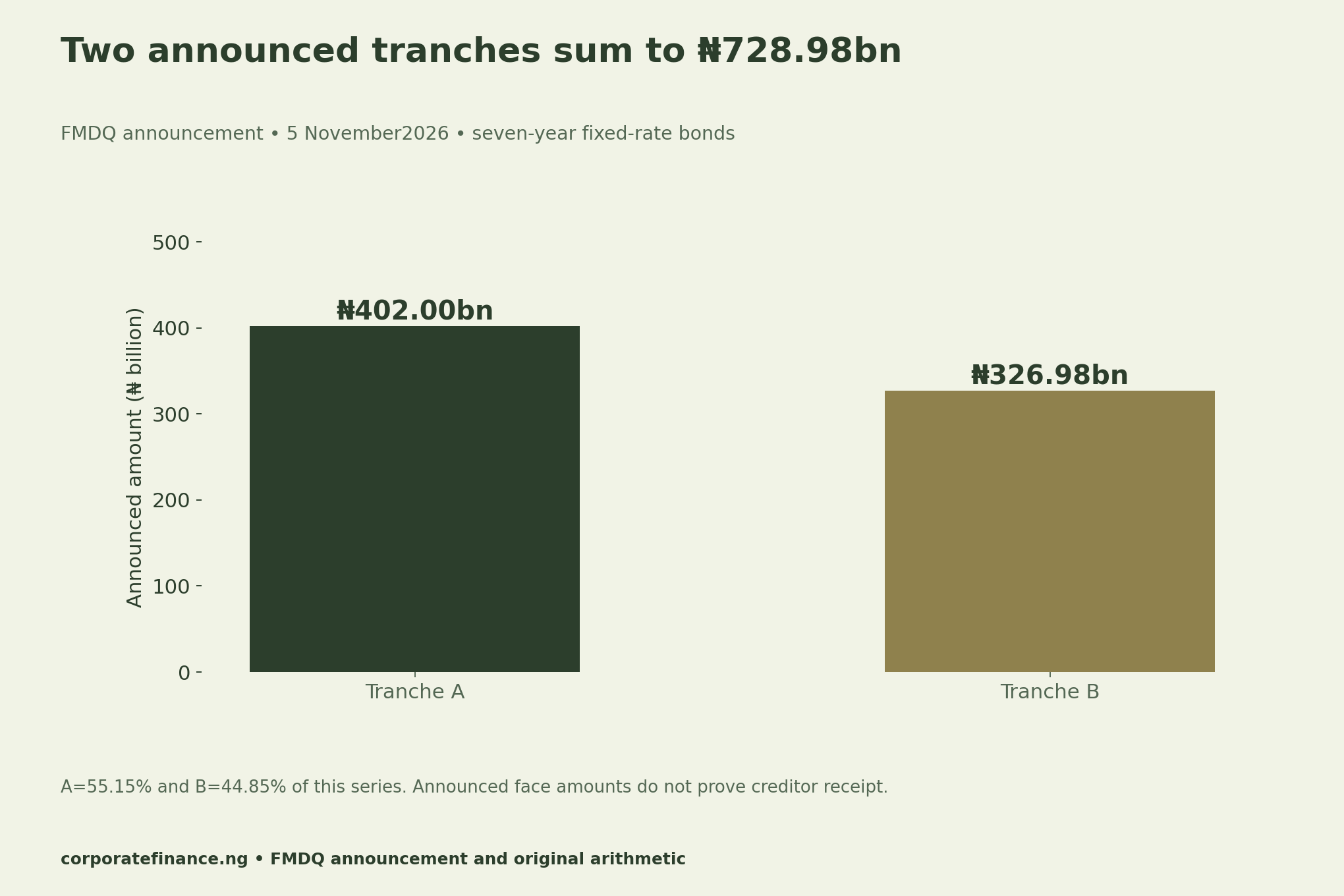
The stated purpose includes legacy GenCo obligations. However, recipient-level payment confirmations are absent from the reviewed announcement. Its executive quotation uses ₦728.97 billion, rather than the headline’s ₦728.98 billion. The difference is ₦0.01 billion, or ₦10 million. We retain both source versions and leave the cause unresolved.
Keep the ratio’s denominator visible
Using the displayed tranche amounts, A contributes 402.00÷728.98×100=55.15% of this series, rounded to two decimals. B contributes 44.85%. Those percentages divide one announced series; they do not describe each creditor’s allocation or the composition of the entire financing programme.
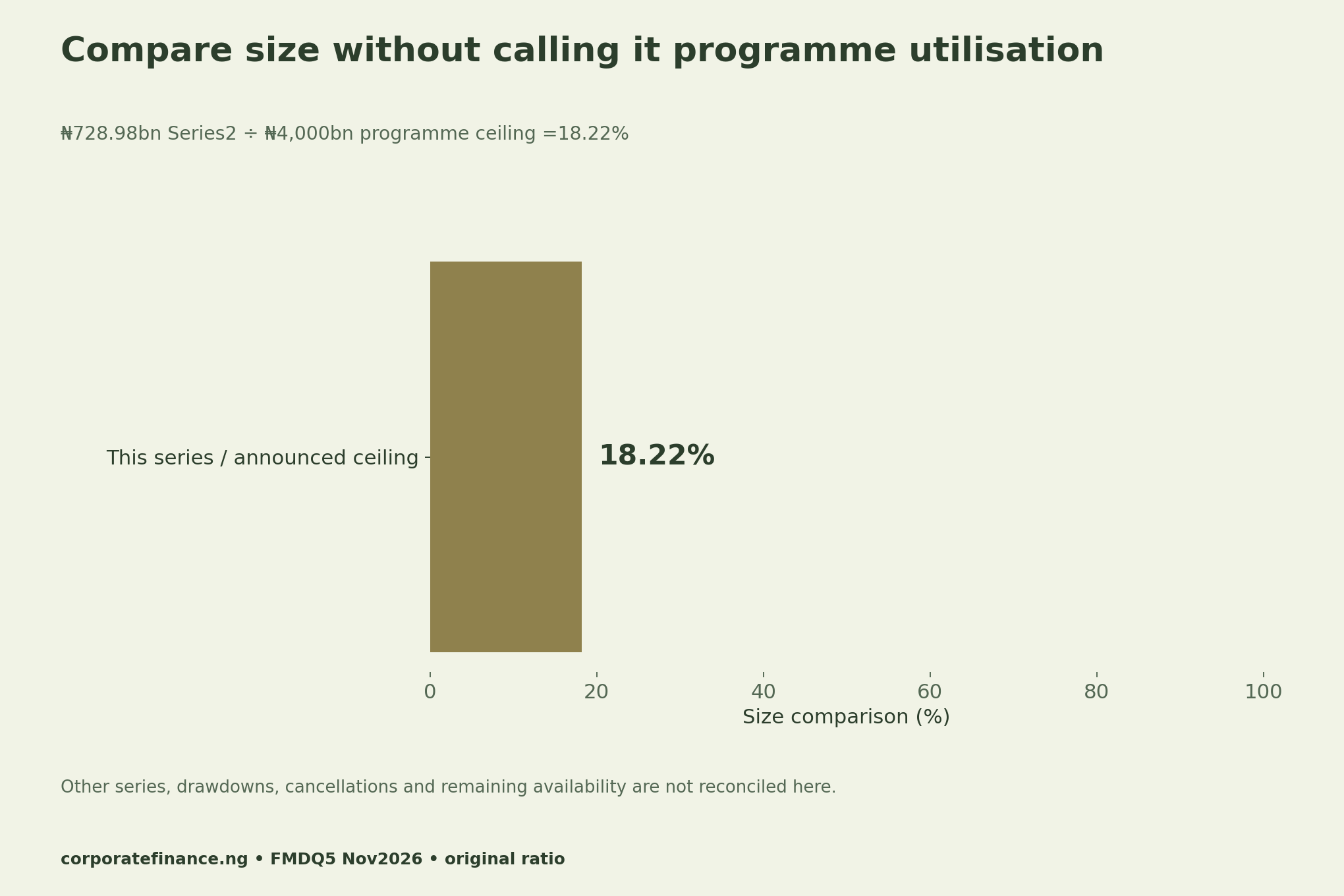
A ceiling is a limit in a stated programme, rather than evidence of a bank balance. To calculate programme utilisation, you would need a consistent register of relevant issuances and changes, including their status and dates. Subtracting this series from the ceiling alone cannot verify what remains available.
Separate issuer funding from a creditor’s receipt
Different entities hold different evidence. Issuer transaction records may establish funding, while a creditor’s bank record establishes a receipt into that account. A remittance schedule then helps explain which obligation the receipt settles. Do not replace those records with a news headline that happens to concern the same sector.
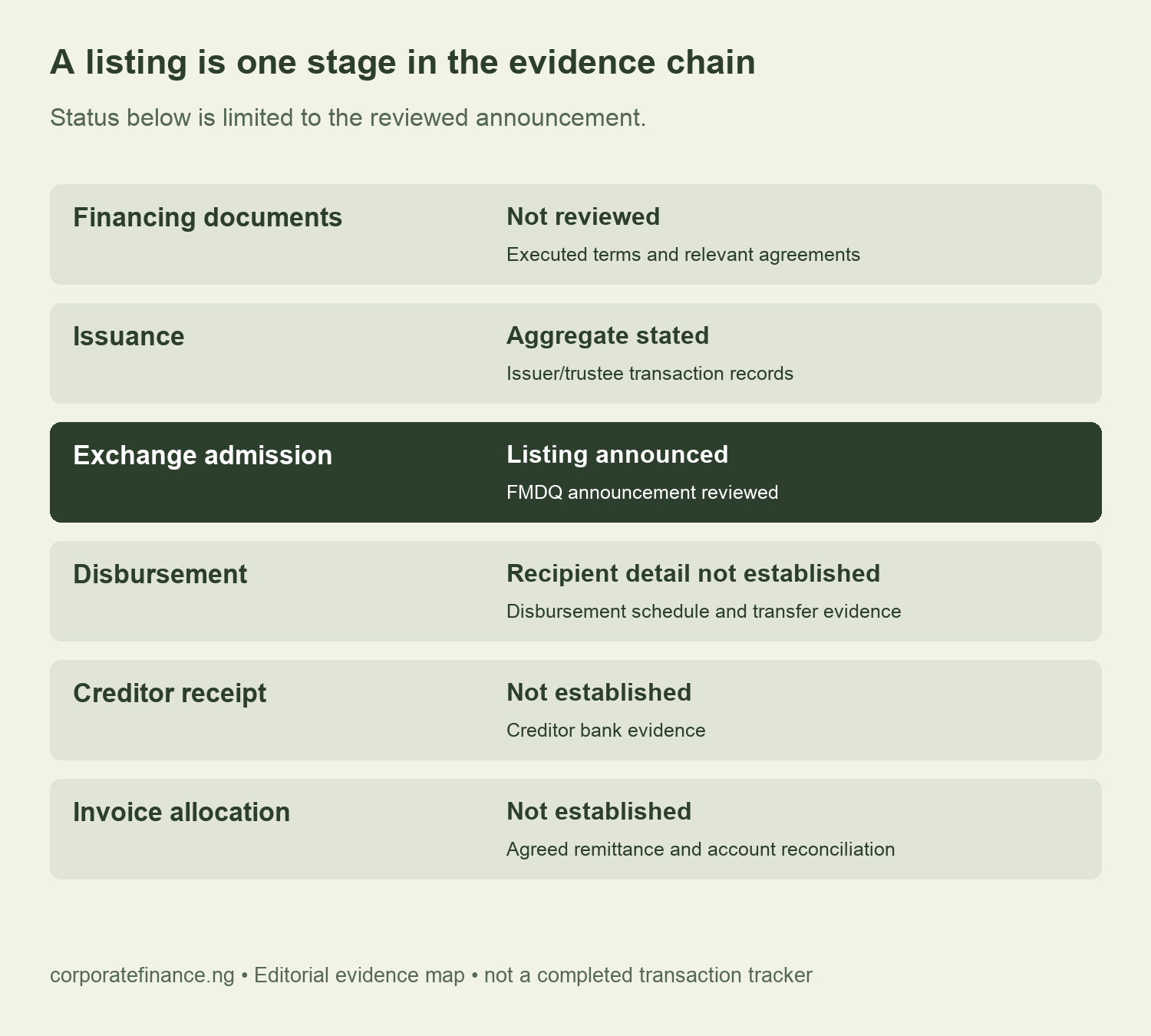
For each stage, retain the document, its date, the entity it concerns and the precise conclusion it supports. “Not established by this source” does not mean the event never happened. It means the reviewed material cannot support that conclusion. This distinction protects the analysis from both premature clearance claims and unsupported accusations of non-payment.
| Question | Evidence to seek | Conclusion to keep separate |
|---|---|---|
| Were financing terms executed? | Current executed instruments and relevant agreements | Terms are not creditor receipts |
| What amount was disbursed? | Dated transfer and disbursement records | A recipient schedule is not its bank confirmation |
| What did the creditor receive? | Its own verified bank evidence | A receipt may cover several obligations |
| Which balance was cleared? | Agreed remittance and account reconciliation | An allocation needs a traceable reference |
Build a receivables bridge from the creditor’s records
Start with an opening balance that has been reconciled for the chosen counterparty, period and currency. Add new charges and separately identified signed adjustments. Deduct only the cash allocated to this account in the movement schedule. Keep the receipt date and allocation reference visible, especially when a single transfer spans several invoices.
The blank ledger separates total cash received from the amount allocated to the particular account. Those fields are not always interchangeable. For example, part of a receipt may still be awaiting an agreed allocation. Retain that uncertainty rather than forcing the closing balance to zero.
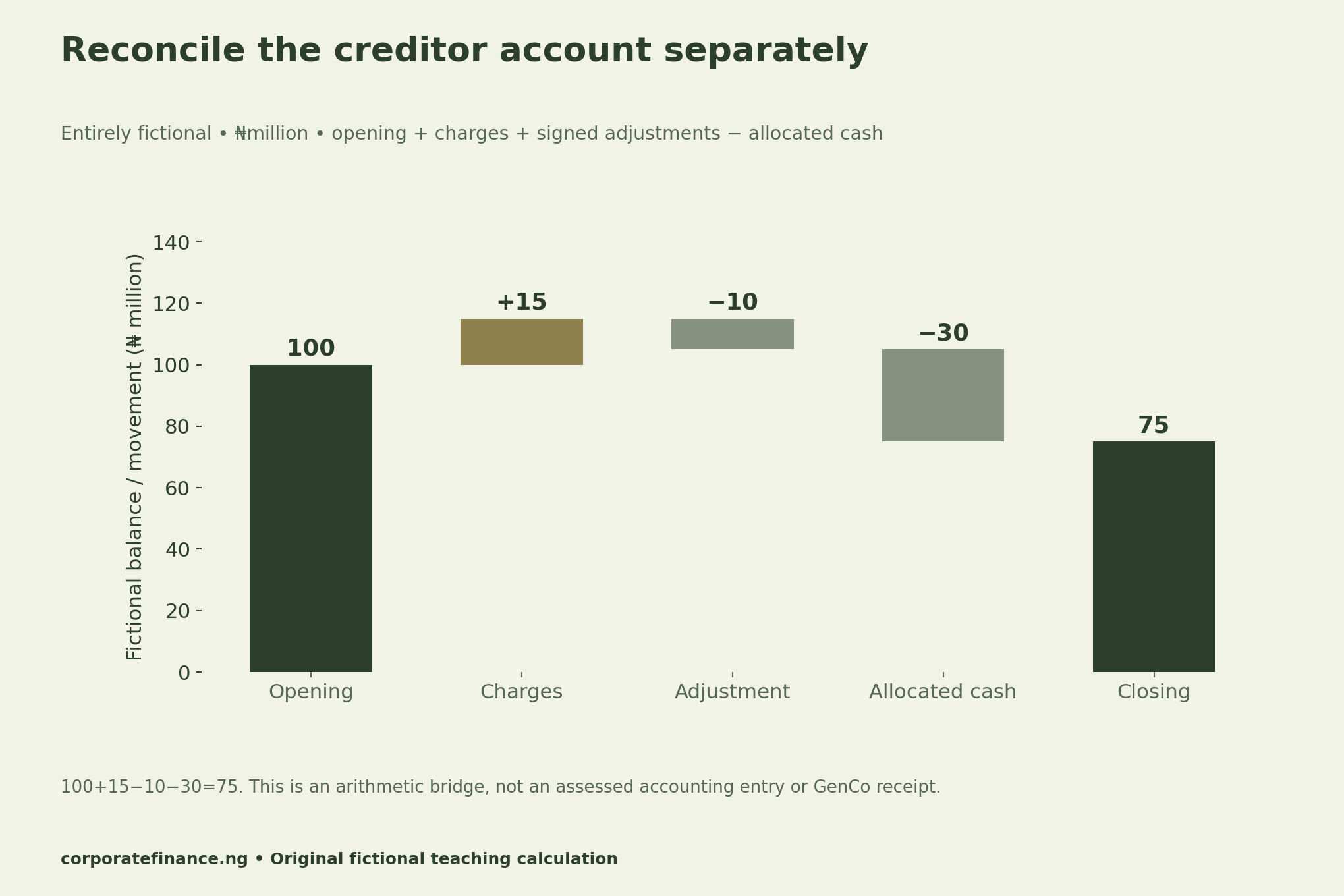
In the example, an agreed negative adjustment reduces the balance by 10 before the cash deduction of 30. If an adjustment increases a balance, give it a positive sign instead. A signed movement column makes the direction visible and keeps the arithmetic reproducible.
The formula is closing=opening+charges+signed adjustments−allocated cash. Test the formula with an unchanged balance, a negative adjustment and a receipt that is only partly allocated. A negative or unexpected result requires explanation; it is not a reason to alter the evidence to obtain a tidy answer.
Resolve differences before describing an obligation as settled
A matching arithmetic total is one control, rather than a complete accounting assessment. Contractual rights, disputes, offsets, timing and relevant reporting requirements can affect the treatment of a receivable. Our worksheet does not assess any current contract or determine derecognition.
The IFRS Foundation’s IFRS 9 overview explains the financial-instrument reporting framework. Applying the relevant requirements to a specific balance needs its own evidence and accounting assessment. This educational ledger does not substitute for that work or establish the treatment of NBET-related balances.
For related distinctions, our MTN cash-tax reconciliation separates cash movement, expense and a closing payable. The Transcorp Power liquidity analysis shows why the definition of a cash figure also matters. Different questions require different supporting schedules.
Download the figures and working tools
- Announcement values, units and derived ratios (CSV)
- Fictional signed receivables bridge (CSV)
- Blank creditor receipts and allocation ledger (CSV)
- Transaction-stage evidence checklist (CSV)
Methodology, limits and citation
We use the displayed amounts in the dated FMDQ announcement. Decimal arithmetic verifies the tranche sum, component shares, ceiling comparison and ₦10 million source difference. The fictional bridge independently reconciles to 75 in millions of naira. The retained script reproduces the figures and CSVs.
We did not review final instrument terms, net proceeds, a guarantee, coupon, amortisation schedule, creditor-level disbursements or invoice settlements. The report therefore makes no claim that debts have been cleared, electricity supply improved or recurring market shortfalls reduced. It is not a bond recommendation, credit rating or conclusion about any creditor’s accounts.
Suggested citation: Nigerian Corporate Finance (12 November 2026), “NBET Series 2 Bonds: Trace GenCo Payment Evidence”, original reconciliation tools with FMDQ’s 5 November 2026 listing announcement. Attribute the announcement when reusing its reported values.


